Considerations when choosing
Ensuring the safety of your employees working at heights or in confined spaces requiring fall arrest devices involves understanding the fundamental components of a hazardous workspace and correctly utilizing appropriate equipment to protect their well-being. A mnemonic device using the letters A for Anchorage, B for Body Support, C for Connectors, and D for Descent and Rescue simplifies remembering these components.
ANCHORAGE CONNECTORS
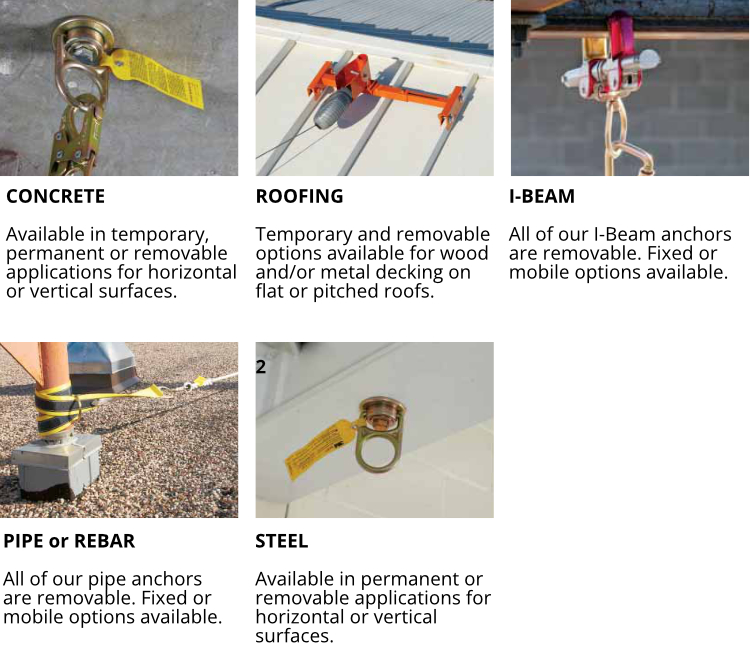
These provide a secure attachment point for lifelines, lanyards, or deceleration devices, engineered to withstand the forces generated during a fall. Anchorage connectors vary based on industry, job requirements, installation type, and structure.
• Examples of anchorage connectors include beam anchors, hook anchors, cross-arm straps, D-bolts, tripods, davits, or other secure devices serving as attachment points.
• Anchorages and anchorage connectors must be independent and capable of supporting 5,000 lbs. per attached worker. Alternatively, they can be part of a complete personal fall arrest system supervised by a qualified person, ensuring a safety factor of at least two times the maximum arresting force. Additionally, they must be positioned high enough to prevent contact with a lower level in the event of a fall.
BODY SUPPORT
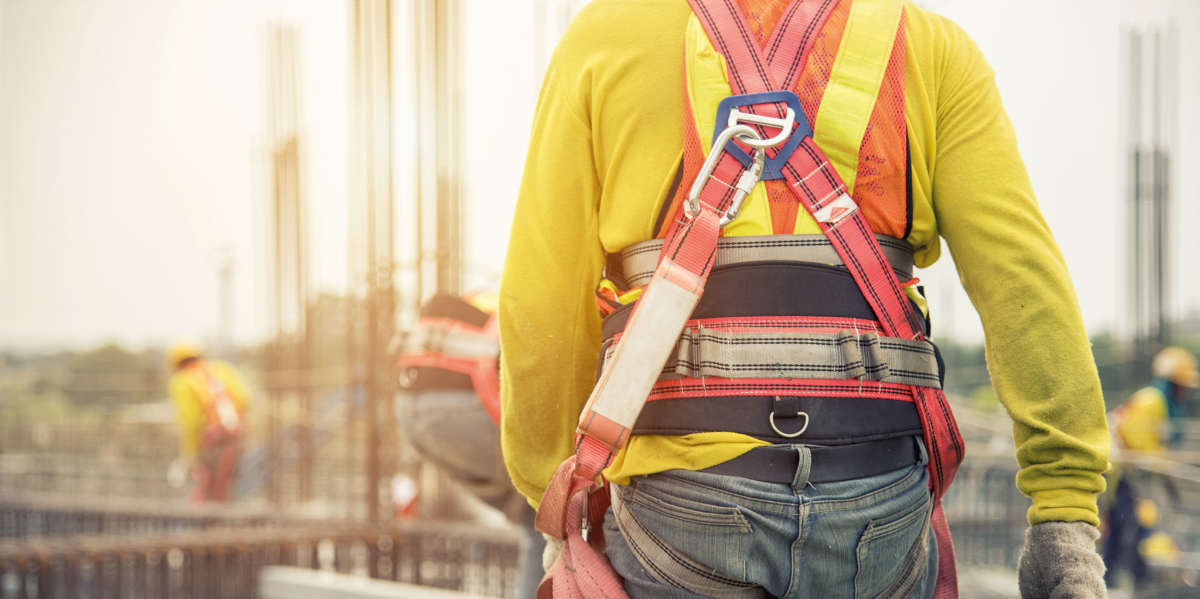
Full Body Harnesses distribute fall arrest forces across the shoulders, upper thighs, chest, and pelvis. Featuring a center back fall arrest attachment (dorsal D-ring) for connecting to the fall arrest connector, they may include additional D-rings for worker positioning, travel restraint, retrieval, or ladder climbing. They are the sole acceptable form of bodywear for fall arrest and should be selected based on size, job requirements, and the work environment.
CONNECTORS
Connectors link the worker’s harness to the anchorage connector, with types varying depending on whether the connection is for:
DESCENT AND RESCUE DEVICES
These are essential for retrieving an injured worker and lowering them to the ground. It is crucial for users to have a rescue plan in place that ensures prompt rescue in the event of a fall or enables employees to self-rescue.
What type of work will you be doing?
What type of hardware connections do you prefer?
A variety of hardware options are available, including quick connect or pass thru buckles for chest, and quick connect, pass thru, or grommet for legs.
Harness family overview
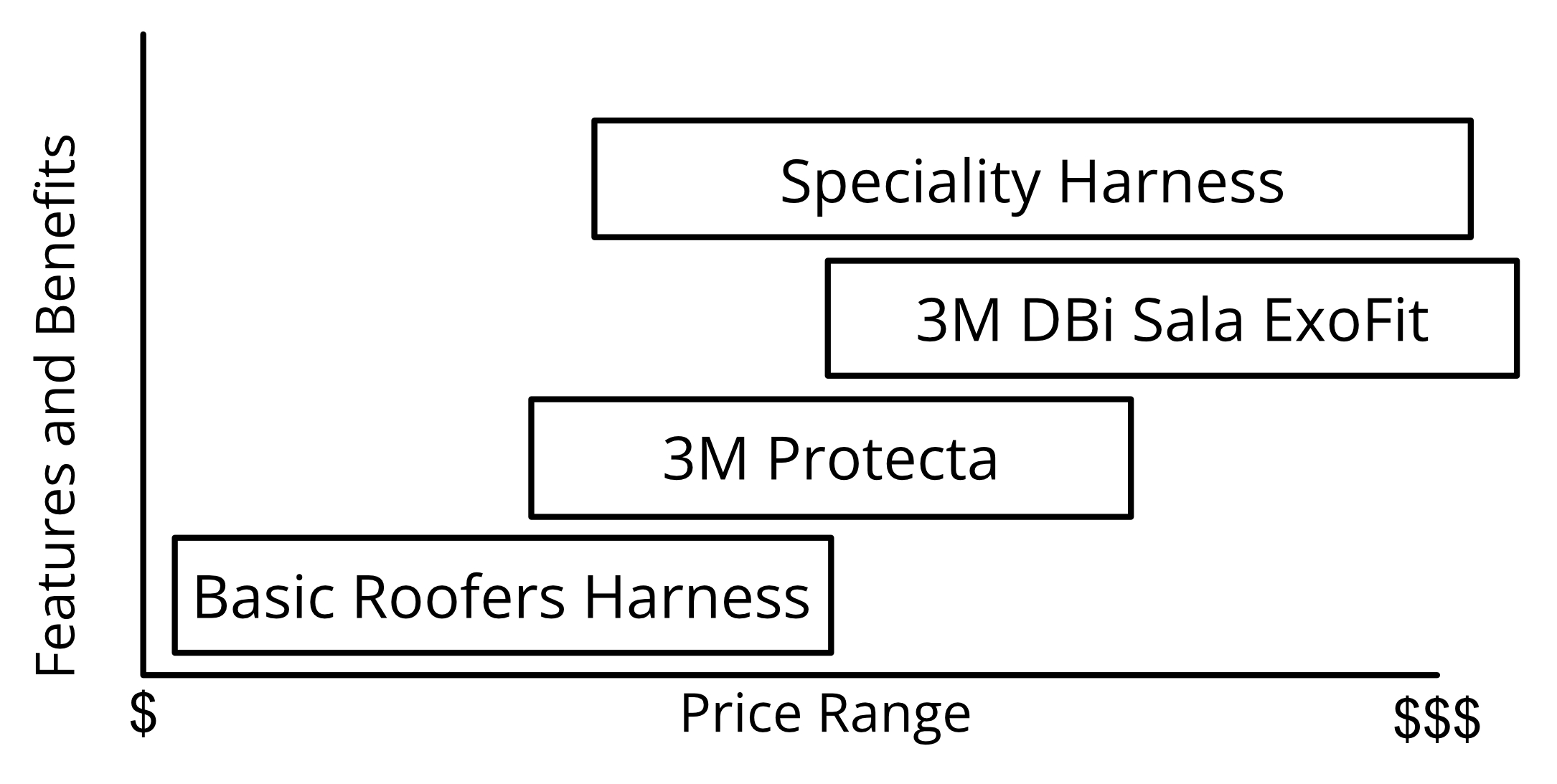
Benefits vs. PriceOur family of 3M™ Fall Protection Harnesses offers a variety of features and benefi ts to fi t your needs as well as your price range. To help you choose the right harness, use this chart to align your budget with desired features and benefi ts.
WORK ENVIRONMENT
When choosing an SRL, it’s important to know the conditions of your work environment. From harsh marine and mining to oil and gas to general purpose, getting the best use out of an SRL depends on understanding where — and how — it will be utilized.
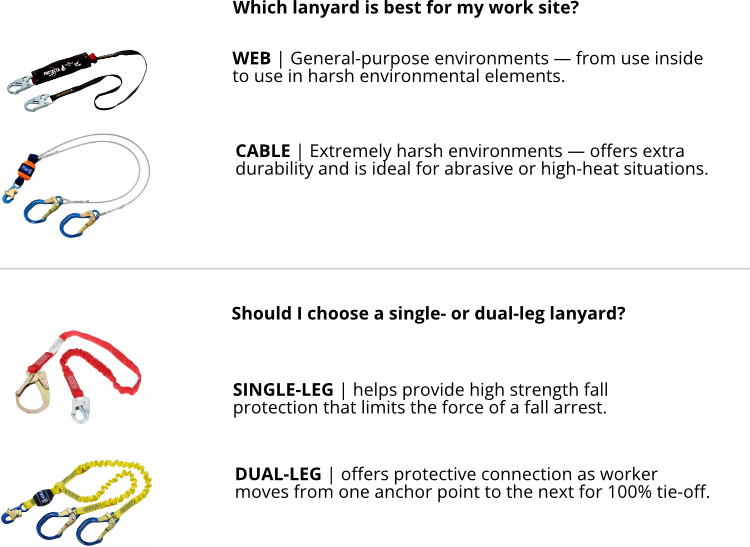
Which lanyard material is required?
WEB | General-purpose environments — ideal for indoor or less harsh environments
CABLE | Extremely harsh environments — offers extra durability and is ideal for abrasive or high-heat situations
Why should I choose a single- or dual-leg lanyard?
SINGLE-LEG | for single anchor point connection to work within a specific range of movement
DUAL-LEG | offers continued protection for a broader range of movement when transferring between anchor points
COST vs. LENGTH AND MATERIAL
Choose from a wide range of our competitively priced web or cable lanyards in lengths from 7 feet to 130 feet.

HARDWARE CHOICES
Housing Hardware
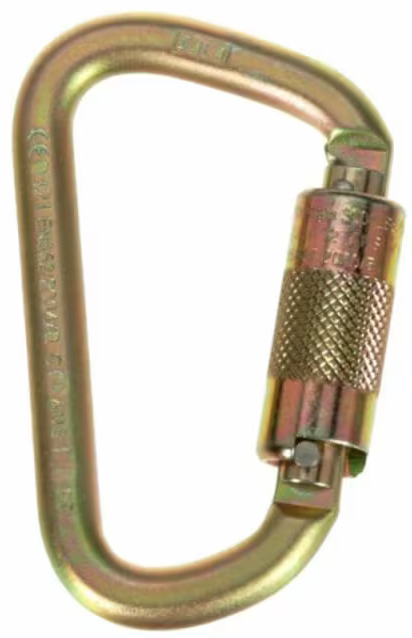
Carabiner
Connects to anchorage connector
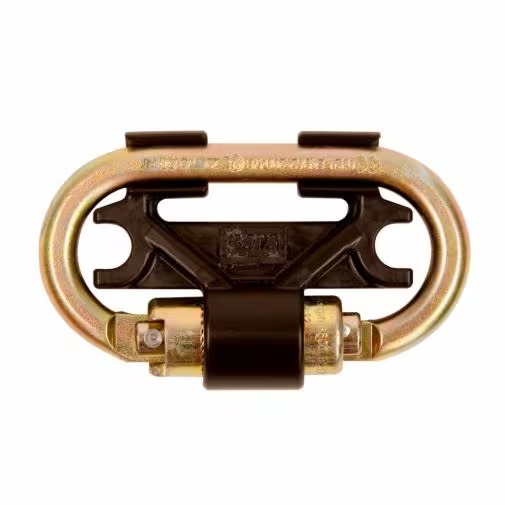
Dual-Leg Adapter
Connects directly to back D-ring, allowing two SRLs for 100% tie-off
Lifeline Hardware

Swivel Snap Hook
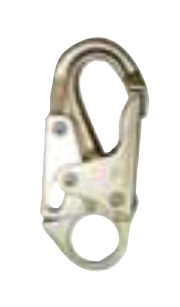
Snep Hook
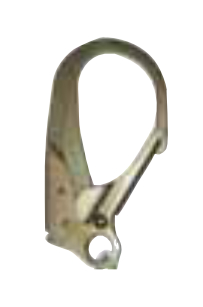
Rebar Snap Hook
CHOOSING A SELF-RETRACTING LANYARD vs. AN ENERGY-ABSORBING LANYARD
Self-retracting lanyards offer greater mobility and maneuverability, which may help increase productivity. They also help shorten fall distance and minimize trip hazards — signifi cantly reducing the potential for injury.
Unlike a typical 6 foot energy-absorbing lanyard, SRLs range in length from 7 feet to 130 feet to increase the working zone. In the event of a fall, the self-retracting lanyard braking mechanism activates as soon as the user reaches an approximate acceleration speed of 4-1/2 feet–6-1/2 ft./sec. (generally 12 inches–18 inches), with a maximum arresting distance of 42 inches as required by OSHA 1910.66 and 1926.502 regulations.
Self-retracting lanyards retain tension on the lifeline at all times, staying out of the worker’s way while providing maximum safety.

WORK ENVIRONMENT
When choosing a lanyard, it’s important to consider the conditions of your work environment. From harsh marine and mining to oil and gas to general purpose, getting the best use out of a lanyard depends on understanding where — and how — it will be used.
COST vs. LENGTH AND MATERIAL
Choose from a wide range of our competitively-priced options to fit your budget requirements. Available in 3 feet, 4 feet, 5 feet, 4 feet–6 feet or 6 feet adjustable or expandable options, depending on range of movement needed.
CONNECTORS AND HOOKS
LANYARD HARDWARE
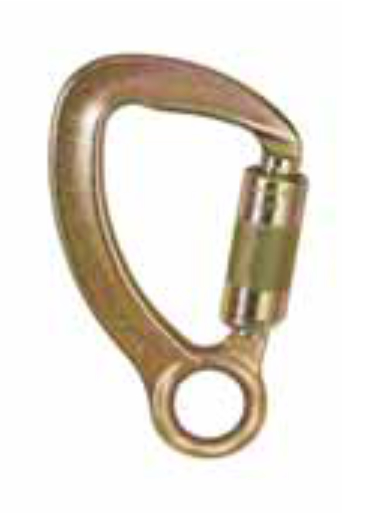
Tie-Back Carabiner
Snap Hook
for connecting to back D-ring of harness or anchorage connector
Rebar Snap Hook
for use when climbing and/or on rebar
HOW DO ENERGY ABSORBERS DIFFER IN LANYARD CHOICES?
CSA standard Z259.11 state that personal arrest systems, when stopping a fall, shall: limit maximum arresting force on an employee to 1,800 lbs. (8 kN) when used with a body harness.
Many 3M lanyards keep forces below 900 lbs. (4 kN), and all 3M lanyards keep forces below 1,800 lbs. (8 kN). External or integrated styles are available, depending on preference.
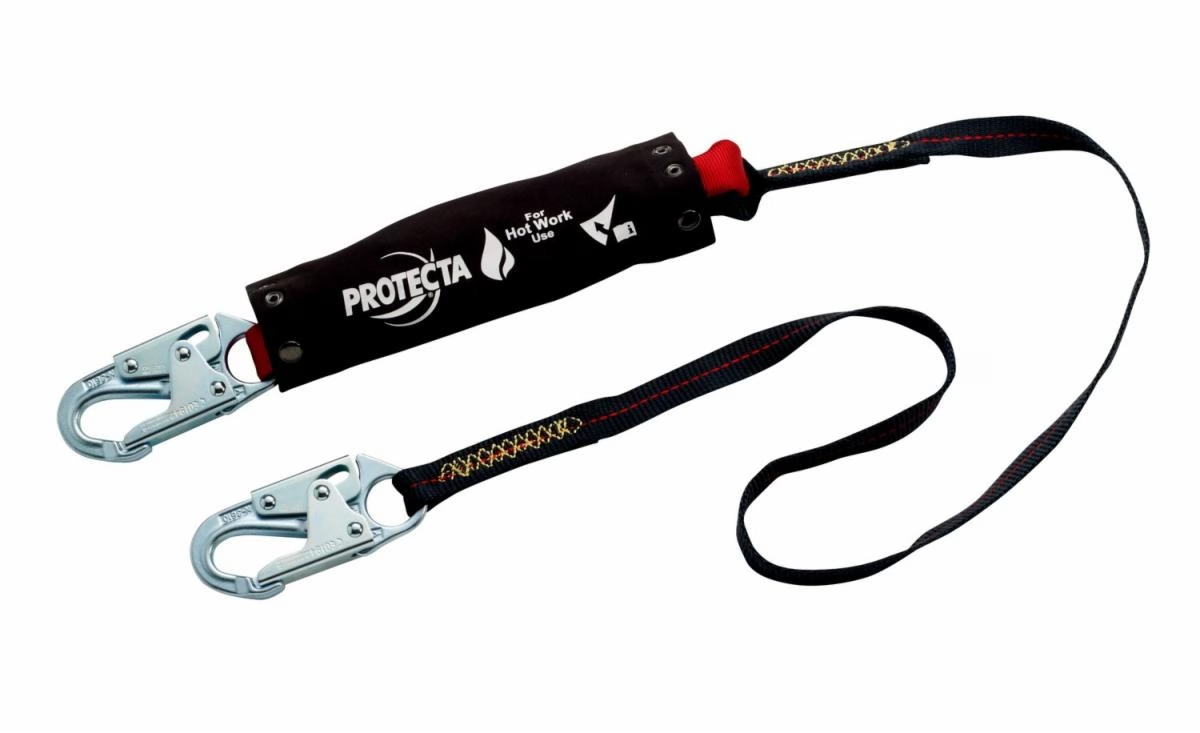
EXTERNAL | Tearweb is packed in a PVC sleeve and tears out during a fall arrest. External energy absorber attaches to back D-ring of harness.

INTEGRATED | Energy absorber is incorporated throughout the length of the lanyard in a low profi le (tubular) design. Available in expandable or non-expandable options
ANCHORAGE CONNECTORS
As soon as you attach yourself to a 3M™ Fall Protection anchorage connector, it’s hard not to grow attached to that feeling of safety. Knowing you’re secure helps you to confi dently get the job done. Whether it’s a rooftop or beam, concrete or steel, you’ll feel as grounded as you did the moment before you started the climb up.
CONSIDERATIONS FOR CHOOSING AN ANCHORAGE CONNECTOR: